

Scotland summons guests with its untamed landscapes, rugged coastlines, and windswept highlands. The expansive terrain, characterised by more and more harsh climate as you head north, nurtures resilient farmers, croft homeowners elevating cattle, and fishermen harvesting the day’s freshest catch.
Traditional Scottish meals scene thrives on a knack for reworking pure bounty from land and sea into memorable dishes. From hearty stews to comforting breakfasts, and from crumbly haggis to buttery shortbread, Scottish recipes embody tradition and creativity.
If you’re planning a visit to Scotland, this information to must-try Scottish dishes explores the flavours and tales behind these culinary creations. Scottish delicacies celebrates the native elements and cooking strategies that outline Scotland’s easy but sustainable gastronomy. Now it’s time to begin tasting!
Scottish Breakfast
Scottish Breakfast
A standard Scottish breakfast just isn’t for the faint hearted. It sometimes consists of bacon, sausages, haggis, black pudding, eggs, baked beans, tomatoes, mushrooms, and tattie scones (potato scones), and typically, a pile of toast in the event you’re not match to burst already.
The predominant variations from an English breakfast are the addition of some quintessentially Scottish components: haggis, Lorne sausage, and tattie scones. Haggis is iconic, and whereas tattie scones can be found in England, they’re not normal on the breakfast plate.
So, what’s Lorne sausage? It is created from minced meat (normally beef or pork), rusk, and spices, then formed right into a loaf and sliced into squares or rectangles. This distinctive form makes it excellent for becoming right into a sandwich or a breakfast roll.
The precise historical past of the Lorne sausage is debated. Some theories counsel it was named after the traditional district of Lorne, now a part of Argyll and Bute, or probably Tommy Lorne, a butcher within the Firth of Lorne. Despite the paradox, Lorne sausage, also known as ‘square sausage’ or ‘flat sausage’, stays essential a part of Scottish breakfasts designed to gas a busy day.
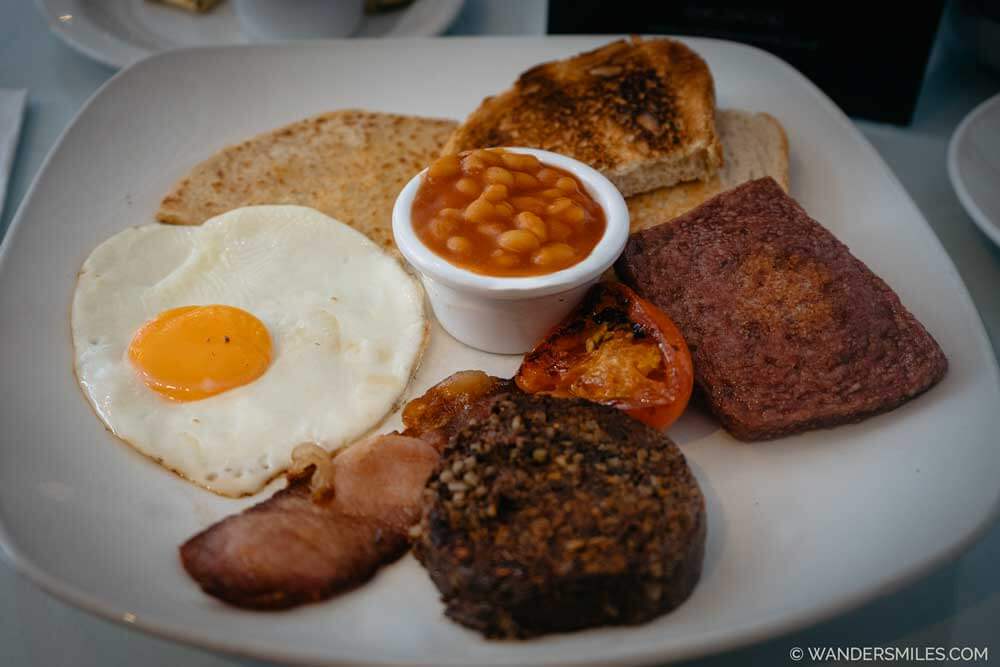 Traditional Scottish Breakfast
Scottish Porridge
Scottish porridge is a hearty breakfast staple created from oats cooked with water or milk till creamy. Topped with honey, berries, seeds, or a sprinkle of salt, it affords a comforting begin to the day, it’s identified for its nourishing qualities and talent to maintain one full and energised. Porridge is a wonderful breakfast selection earlier than heading in your out of doors adventures in Scotland.
Oats, initially delivered to Scotland by the Romans to feed horses, thrived within the nation’s beneficial circumstances: lengthy daytime, considerable rainfall, and acidic soil. Alongside barley, oats grew to become one of many few grains that would prosper within the difficult Highland surroundings.
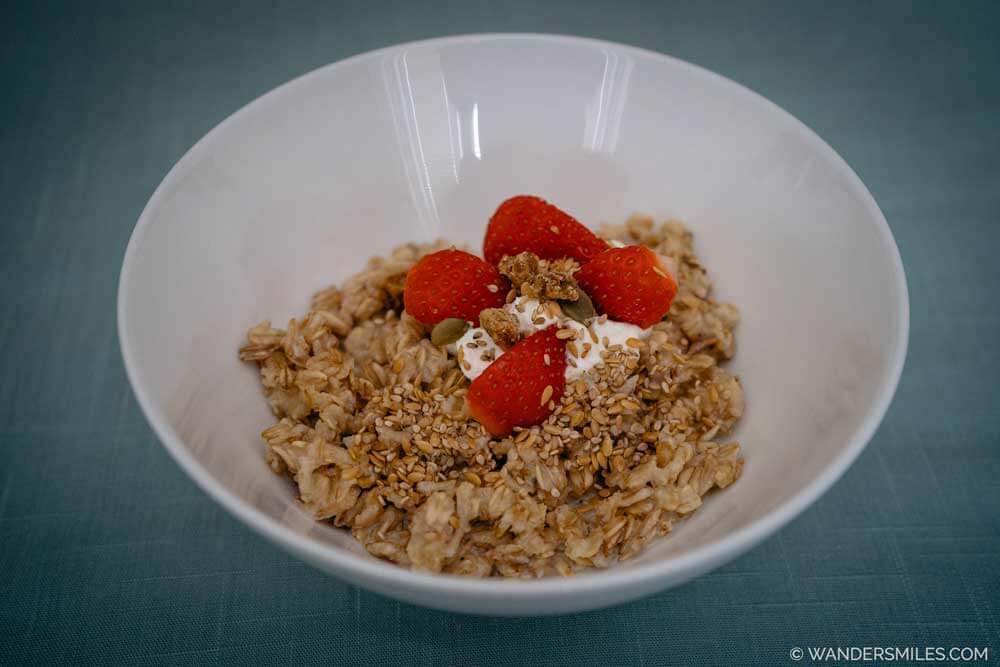 Scottish Porridge
Scottish Dishes
Cullen Skink
Cullen Skink is a conventional Scottish soup created within the city of Cullen in Moray. The time period “skink”, from the Gaelic phrase for “essence,” originated as a beef broth however developed right into a smoked haddock soup within the Eighteen Nineties attributable to laborious instances.
This hearty dish options undyed smoked haddock as its major ingredient, together with potatoes, onions, and milk or cream for a wealthy consistency. Seasoned with salt, pepper, and typically bay leaves or parsley, it’s much like the creamy fish chowder that began on the Atlantic coast of France and was taken on by Newfoundland and Ireland.
To rejoice this much-loved a part of Scotland’s culinary heritage, the Cullen Skink World Championships are held yearly in Cullen. If you like it that a lot, you possibly can style conventional Scottish meals to your coronary heart’s content material!
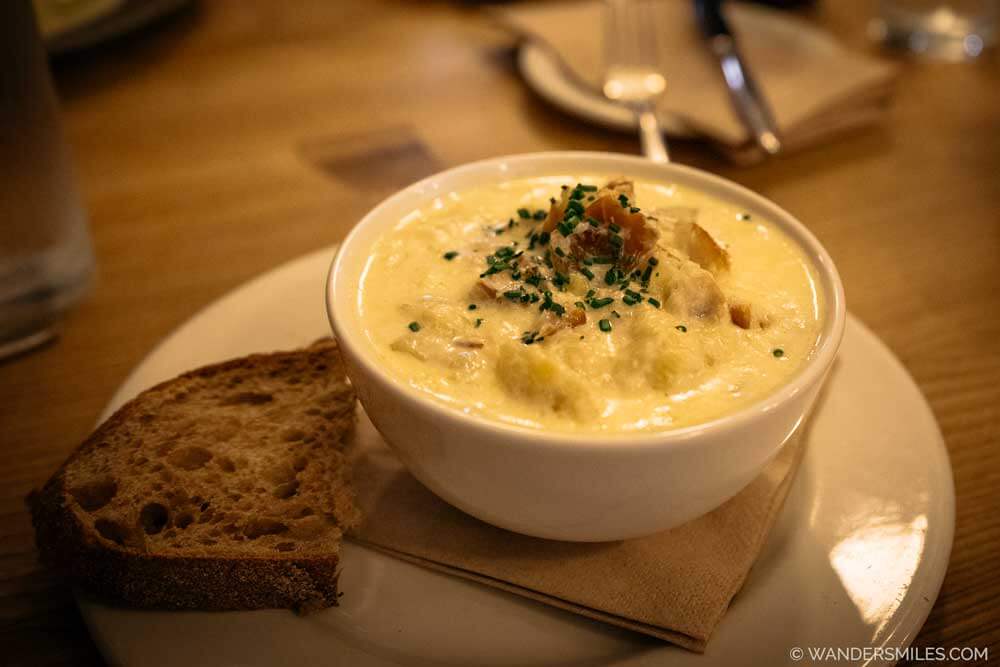 Cullen Skink: Popular Scottish Soup
Haggis
Haggis is Scotland’s nationwide dish, nonetheless it’s origins are shrouded in thriller. Many imagine it has Viking connections, and a few hint it again to thirteenth century France after they had an alliance with Scotland. The earliest written reference to a sausage resembling haggis comes from the Greek playwright Aristophanes, who talked about it in 423 BC. Either approach, Scotland has proudly taken haggis on as their very own, and has turn out to be an emblem of Scottish culinary tradition.
So what’s haggis really made from? It consists of sheep’s offal (coronary heart, liver, lungs) blended with onions, oatmeal, suet, and spices, all encased within the animal’s abdomen and boiled. The dish was created out of necessity guaranteeing all components of the animal have been used, blended with available elements and preserved by means of conventional cooking strategies.
This savoury pudding is famously celebrated on Burns Night, honouring the poet Robert Burns, who wrote “Address to a Haggis” in 1787. Today, haggis is widespread all year-round so in the event you go to Scotland, you possibly can look forward to finding it on the breakfast buffet, and supplied in some capability in eating places. Whether it’s served with “neeps and tatties” (turnips and potatoes) as a predominant course, or as a starter as ‘Haggis Bon Bons’ rolled in breadcrumbs deep-fried with whisky cream on the aspect, it’s undoubtedly a tasty conventional Scottish meals.
Some Scottish eateries have created vegetarian and vegan haggis options, strive Glasvegan in Glasgow, and The Haggis Box or Hendersons, each in Edinburgh.
 Breaded Haggis Bon Bons
Stovies
Stovies can solely be described a traditional Scottish consolation meals. The stew is created from potatoes, onions, and meat, historically beef or lamb, slow-cooked collectively till tender and oozing with flavour.
Like many filling dishes, Scottish Stovies are historically the leftovers of a roast dinner, fairly actually, the “scrapings off the stove”. Often loved with oatcakes or crusty bread, stovies personify the resourceful spirit of Scottish house cooking.
 Stovies: Traditional Scottish stew
West Coast Scallops
West Coast scallops are succulent shellfish well-known for his or her candy, delicate flavour. Found off Scotland’s rugged west coast, notably across the Hebrides and Isle of Skye, they’re sustainably harvested by native fishermen. These scallops have been a culinary custom for generations, loved recent or pan-seared with butter and herbs.
 Hebridean Scallops
Scottish Salmon
Sourced from the chilly, clear waters round Scotland’s coast, notably the Highlands and Islands like Orkney and Shetland, Scottish salmon is thought for its sustainable farming practices and excessive dietary content material, wealthy in omega-3 fatty acids.
Scottish salmon fishing has a historical past relationship again hundreds of years, with proof suggesting early inhabitants relied on rivers considerable with salmon as an important meals supply since round 8,000 BCE.
Scottish salmon is a sought-after delicacy making it a cornerstone of Scotland’s culinary exports. It’s loved grilled, smoked, or in dishes starting from salads to connoisseur meals, and is a agency favorite amongst seafood fans.
 Scottish smoked salmon
Scotch Egg
A Scotch egg is a tasty snack consisting of a tough or soft-boiled egg wrapped in seasoned sausage meat, coated in breadcrumbs, and deep-fried or baked till golden.
Despite its identify, the Scotch egg’s historical past is traced to 18th-century England, attributed to the Fortnum & Mason division retailer in London. Its identify possible derives from “scotched,” which means minced meat or crushed, quite than its Scottish origin.
During my Glasgow Food Tour, I had the pleasure of tasting a Stornoway Black Pudding Scotch Egg, including a Scottish twist to this culinary treasure—and it was undeniably scrumptious.
 Scotch Egg with Stornoway Black Pudding
|| You May Like To Read About Foods of Cumbria
Scottish Desserts & Snacks
Scottish Tablet
Scottish Tablet is a deliciously candy confection that’s created from sugar, condensed milk, and butter. The flavour is much like fudge, nonetheless it has a extra firmer and crumbly texture. The precise origin of Scotland’s melt-in-the-mouth pill is unknown, however it was first famous in The Household Book of Lady Grisell Baillie within the early 18th century.
It’s straightforward to make, with the elements boiled after which cooled to set. If you need to go fancy, you possibly can add vanilla, whisky or nuts. The Scottish Tablet is a traditional after-dinner deal with that usually wraps up particular meals at Scottish weddings and occasions. Let’s be trustworthy, it’s excellent for anybody with a candy tooth!
 Scottish Tablet
Clootie Dumpling
Clootie dumplings are a conventional Scottish dessert, named after the “cloot,” or fabric, used to boil them. This spiced pudding, also known as Christmas pudding or plum pudding, dates again to the seventeenth century. It was a standard follow to cover cash or charms throughout the pudding as a strategy to bestow good luck upon the finder, although there was all the time the hope that the lucky particular person wouldn’t break a tooth within the course of!
The key elements of clootie dumplings embody flour, breadcrumbs, suet, dried fruits, sugar, spices, and milk, usually blended with treacle or golden syrup. The combination is wrapped in a fabric, boiled, after which dried, leading to a dense, fruity pudding historically served throughout festive events.
 Clootie Dumpling and Custard
Scottish Shortbread
Scottish shortbread is an easy, buttery deal with that dates again to medieval instances, initially evolving from a biscuit-style bread created from leftover dough. By the sixteenth century, it had turn out to be a refined, buttery deal with, popularised by Mary, Queen of Scots.
Traditionally, shortbread was baked for particular events like Christmas and Hogmanay. The new 12 months customized of shortbread comes from pagan Yule Cakes, and it’s nonetheless supplied to the primary individual to enter the house of a family on New Year’s Day.
Its easy but wealthy recipe of flour, sugar, and butter has remained largely unchanged. Whether loved with a cup of tea or given as a present, Scottish shortbread is a timeless traditional.
 Scottish Shortbread
Scottish Oatcakes
Scottish oatcakes are healthful biscuits made primarily from oats, flour, butter, and typically a pinch of salt leading to a country texture and nutty flavour.
Favoured for his or her lengthy shelf life and nourishing qualities, Scottish oatcakes could be loved at breakfast with jam or as a snack. Robert Burns confirms the thrill of pairing with oatcakes when he penned “Oatcakes are a delicate relish when eaten warm with ale” within the 18th century.
In the true spirit of Burns, throughout our whisky tour of Lochranza Distillery on the Isle of Arran, we tasted the Single Malt and creamy Arran Gold whereas pairing oatcakes with native cheese and smoked salmon. The mixture of flavours balanced and complemented one another completely.
 Scottish Oatcakes
Tunnock’s Teacakes
Tunnock’s Teacakes are iconic Scottish treats consisting of a fluffy marshmallow dome atop a biscuit base, coated in milk chocolate. Introduced in 1956 by Tunnock’s, a famend Scottish bakery positioned in Uddingston, they shortly grew to become a nationwide favorite.
Originally marketed as a lighter various to desserts, Tunnock’s Teacakes at the moment are cherished for his or her nostalgic enchantment and proceed to be loved throughout the UK and past. I defy anybody to say they aren’t keen on a Tunnock’s Teacake!
Irn-Bru
Irn-Bru is Scotland’s treasured vibrant orange soda, well-known for its distinctive flavour that blends citrus and hints of spices. Created in 1901 by A.G. Barr in Glasgow, Irn Bru shortly grew to become Scotland’s different nationwide drink beside whisky.
Found all through Scotland, Irn-Bru holds a particular place in native tradition, and it’s reputation at gatherings and sporting occasions is unwavering. Most of all, it’s thought-about a treatment for the occasional (or not) hangover. I used to be struck by how related the style of Inca Kola in Peru was, and contemplating it’s additionally their nation’s beloved fizzy drink.
 Cans of Irn Bru
Best Traditional Scottish Food Tours
The greatest strategy to expertise typical Scottish meals is by experiencing the divine eating places and attractive eateries, To get the lowdown from an area, take a look at meals excursions in your travels. I’ve included choices for Edinburgh and Glasgow as most travellers will make a cease at one, or each of those great cities.
Best Food Tours In Edinburgh
Best Food Tours In Glasgow
PIN to examine Traditional Scottish Food
Disclosure: This submit comprises affiliate hyperlinks, which implies I could obtain a small fee in the event you click on a hyperlink and buy one thing that I’ve really helpful. It comes for gratis to you. Thank you on your help.